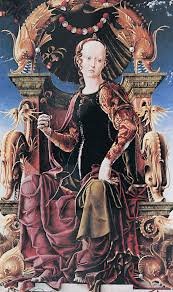
A Singular Voice in the Italian Renaissance While Florence had Botticelli and Leonardo, and Venice would soon boast Bellini and Giorgione, the small court of Ferrara in northern Italy fostered its own brilliant, if lesser-known, school of painting. At its heart stood Cosimo Tura (c.1430–1495)—a painter of rare imagination whose work fused Gothic elegance with a restless, metallic energy that set him apart from his contemporaries. Known as Il Cosmè, Tura’s paintings are unforgettable: figures clad in sculptural draperies that seem hammered from bronze, faces with crystalline expressions, and landscapes glowing with eerie, supernatural light. His art defied easy classification—it was both austere and…
-
-
The Italian Renaissance—spanning from the 14th to the 17th century—was a period of extraordinary cultural rebirth. It wasn’t merely an artistic movement; it was a revolution in thought, aesthetics, and craftsmanship. This golden era, born in cities like Florence, Rome, and Venice, reshaped not only how people saw the world but also how they built, decorated, and lived in it. From breathtaking frescoes to symmetrical architecture and lavish interiors, the design sensibilities of the Renaissance reflect a deep reverence for classical antiquity, humanism, and harmonious proportion. Let’s dive into the rich tapestry of this iconic period’s art, interior design, and…
-
Michelangelo Buonarroti, one of the most celebrated artists of the Renaissance, left an indelible mark on art history. Known for his breathtaking sculptures, monumental frescoes, and profound architectural designs, Michelangelo embodied the spirit of the Renaissance—a period of rediscovery, innovation, and artistic brilliance. Come with me as we explore Michelangelo’s life, artistic achievements, and the enduring legacy of his work. A Brief Biography Michelangelo was born on March 6, 1475, in Caprese, Italy. Despite his father’s hopes that he would enter a more conventional career, Michelangelo was drawn to art from an early age. At 13, he apprenticed under Domenico…
-
The Renaissance period, spanning from the 14th to the 17th centuries, was an era of profound cultural and intellectual change, and this revolution was not just confined to literature, science, and art—it extended into the realm of furniture design as well. Renaissance furniture was characterized by its distinct style, marked by the symbiosis of function and aesthetics. This was the period when furniture started to be regarded not only as a necessity but also as an art form and a symbol of wealth and status. Designs during the Renaissance period were heavily influenced by the classical Roman and Greek styles,…