There is something undeniably magical about a well-designed reading nook. It is the rare space that belongs entirely to quiet moments. It’s where the world slows, the senses soften, and the imagination opens. Whether carved into the corner of a living room, framed beneath a window, or tucked into an unexpected architectural pocket, a cozy reading nook is more than a décor trend. It is a personal sanctuary for book lovers, shaped by comfort, beauty, and intentional design. The heart of any reading nook begins with seating that invites lingering. In many homes, this means a plush armchair with deep…

-
-
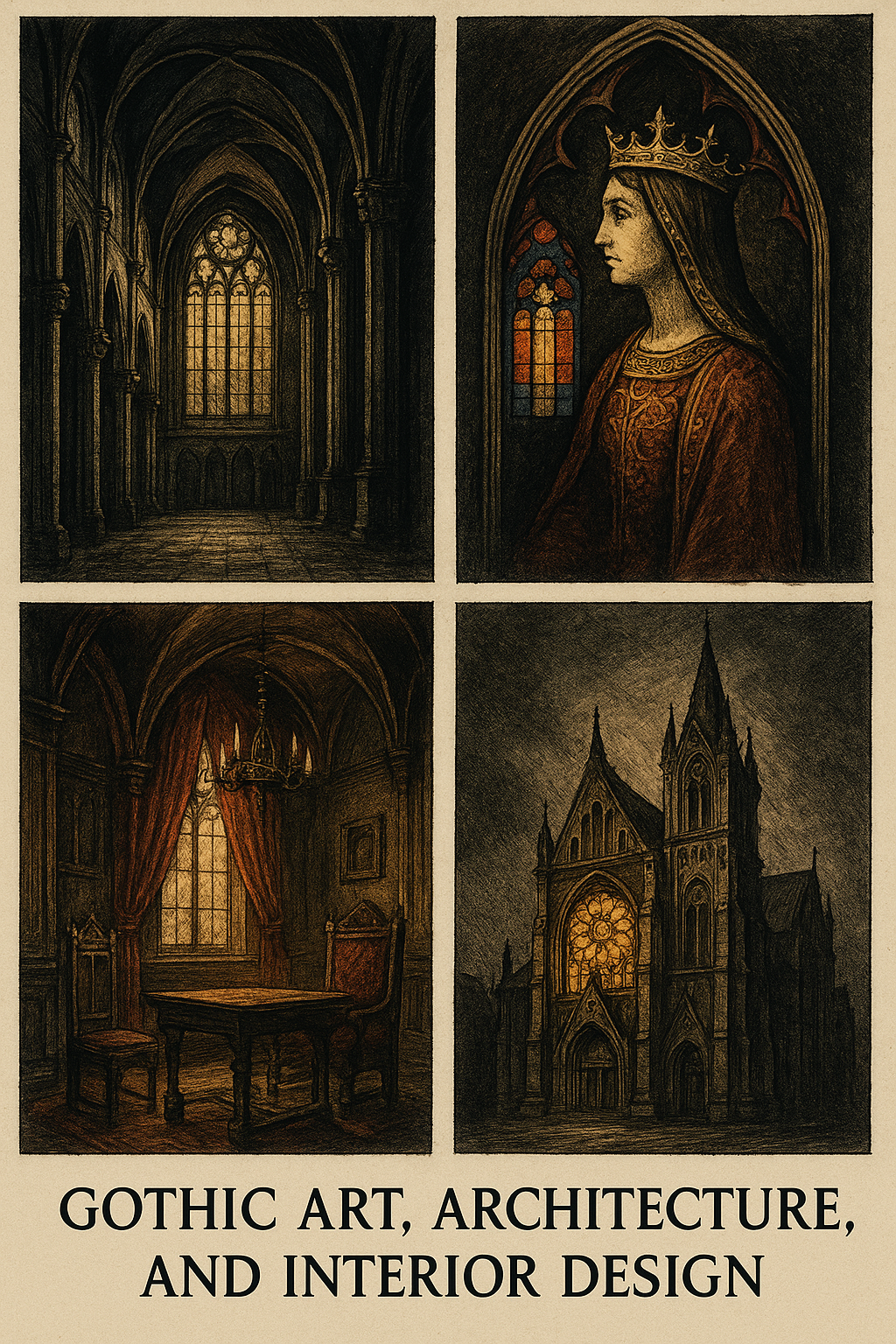
When we think of Gothic design, our minds often conjure images of medieval cathedrals, shadowy castles, and ornate tracery glowing in candlelight. But Gothic design isn’t just locked away in history—it’s experiencing a modern revival, reimagined for contemporary interiors, architecture, and lifestyle aesthetics. The Gothic Spirit, Reborn At its heart, Gothic design is about contrast—dark against light, mystery against clarity, intricacy against minimalism. Modern reinterpretations lean into this duality by blending the dramatic allure of Gothic arches, pointed windows, and ornate detailing with clean lines, open spaces, and sleek finishes. Imagine blackened steel staircases paired with floor-to-ceiling windows, or traditional…
-
Few styles capture the imagination as powerfully as Gothic. Emerging in medieval Europe, Gothic art and architecture married soaring ambition with intricate craftsmanship, creating spaces that felt at once awe-inspiring and deeply spiritual. From the pointed arches of towering cathedrals to the atmospheric interiors of neo-Gothic revival homes, this style has left an indelible mark on art, design, and our collective cultural imagination. This is truly one of my favorite art styles. Origins of Gothic Style Gothic art and architecture flourished between the 12th and 16th centuries, beginning in France before spreading across Europe. The style developed as a departure from the…
-
Piet Mondrian is a name synonymous with pure abstraction and geometric harmony. Best known for his grid-based compositions featuring bold black lines and primary colors, Mondrian’s art embodies a quest for universal beauty and balance. His work laid the foundation for countless design disciplines, from modernist architecture to minimalist fashion and graphic design. But behind the strict geometry lies a deeply spiritual and philosophical artist whose journey from naturalism to abstraction tells a story of intellectual rigor and visionary transformation. A Life in Search of Harmony: Piet Mondrian’s Biography Early Life and Training (1872–1908) Pieter Cornelis Mondrian was born on…
-
The Golden Ratio, also known as Phi (1.618), is a mathematical concept with a fascinating link to beauty and balance. For centuries, artists, architects, and designers have used it to create visually appealing works. But what exactly is the Golden Ratio, and how can it enhance your designs? What is the Golden Ratio? The Golden Ratio is a specific proportion. If you divide a line into two parts, the longer part divided by the smaller part should equal the whole length divided by the longer part. This ratio, roughly 1.618, is found in nature, art, and design. Why Use the…
-
The Greek Revival style emerged in the late 18th century as a homage to the architectural achievements of ancient Greece. Characterized by its majestic columns, pediments, and a sense of restrained elegance, this architectural movement became synonymous with democracy, cultural refinement, and timeless beauty. Journey with me and let’s take a look at the origins, defining characteristics, and enduring legacy of the Greek Revival style, showcasing its influence on architecture, furniture, and design. Historical Context: The Birth of Greek Revival The late 18th century was a time of profound change. The Enlightenment had sparked interest in classical antiquity, leading to…
-
Few photographers have left as indelible a mark on the world of photojournalism as Robert Capa. Known for his fearless approach to conflict zones and his ability to convey the raw emotion of war, Capa captured some of the most iconic images of the 20th century. His legacy goes beyond the battlefield—Capa’s work is a testament to the human spirit, resilience, and the complexities of war that affect both soldiers and civilians. Early Life and the Making of a War Photographer Born Endre Friedmann in Budapest, Hungary, in 1913, Robert Capa grew up in a tumultuous political climate that would…
-
By: Rachel D. Knepp In the ever-evolving world of interior design, technology is playing an increasingly pivotal role, and at the forefront of this change is artificial intelligence (AI). From automated processes to personalized design suggestions, AI is transforming how spaces are conceptualized, planned, and brought to life. The intersection of technology and creativity is reshaping the interior design landscape, enabling designers to harness AI’s capabilities to push their ideas further and deliver more innovative, functional, and personalized spaces. AI’s Influence on the Design Process Traditionally, interior design has relied heavily on the designer’s vision and manual planning to create…
-
In the ever-evolving world of interior design, certain styles stand the test of time, captivating hearts and homes with their nostalgic charm and timeless elegance. Vintage and retro decor are two such styles that have made a remarkable comeback, offering a delightful blend of history, character, and personality. Whether you’re drawn to the elegance of the early 20th century or the bold, playful aesthetics of the mid-20th century, vintage and retro decor provide a treasure trove of inspiration. Let’s explore the defining characteristics, key elements, and tips for incorporating these styles into your home. Understanding Vintage and Retro Decor While…
-
Weighing the pros and cons of an open floor plan.